Gardening Services in Colindale

Gardening Services Colindale provides practical help with keeping domestic and shared outdoor spaces tidy, healthy and ready to use. Our work can cover routine garden maintenance, lawn care, hedge trimming, garden clearance and broader landscaping tasks where a clearer plan or a fresh layout is needed. The aim is straightforward: keep the outside space manageable, improve its appearance and make each task as deliberate as possible rather than leaving it to chance.
We support gardens that need regular attention as well as plots that have become overgrown or uneven in use. Some customers want steady upkeep for grass, borders and shrubs; others need heavier work to clear, reshape or simplify the space before moving on to planting or other improvements. That combination of maintenance and repair means the service can be adapted to the condition of the garden, the time available and the level of finish required.
For a clear starting point, it helps to think about the work in stages: what must be cut back, what should be kept, what needs removing and what could be improved with better structure. If you are deciding what belongs in the job, start with the most visible and practical areas first. Then ask for a quotation once the main tasks are clear.
Regular garden maintenance
Routine garden maintenance is often the most efficient way to keep an outdoor space under control. That can include weeding, light pruning, tidying beds, managing growth around paths and helping borders stay defined rather than blending into one another. Regular attention tends to reduce the need for larger recovery work later, especially where grass, hedges and soft planting all grow at different speeds through the season.
We can approach maintenance as a set of repeatable tasks rather than a vague catch-all. For example, one visit may focus on cutting back soft growth and removing debris, while another may involve edging, clearing fallen material and restoring a cleaner finish around planting areas. If a garden has seasonal changes in growth, the work can be adjusted so the most pressing jobs are handled first and less urgent details follow afterwards.
Typical maintenance decisions often include:
- how much of the growth should be reduced rather than removed
- whether the priority is appearance, access or long-term plant health
- which areas should be left undisturbed because they are newly planted or intentionally wild
- how much waste will need to be taken away after the work is complete
Lawn care and grass cutting

Grass cutting is usually most effective when it is matched to the current condition of the lawn, not treated as a one-size-fits-all task. A closely mown lawn needs a different approach from one that has grown long, become patchy or been mixed with weeds at the edges. Our lawn-mowing work is aimed at creating a neater surface, improving access and helping the grass stay more manageable over time.
Where a lawn has been neglected, the first pass may be about bringing the height down carefully and leaving enough structure for the grass to recover well. Once that has been done, ongoing cuts can help keep the surface even and prevent the job from becoming laborious again. In practical terms, the right lawn care approach depends on the season, the grass type and whether the space is mainly decorative or used regularly for walking, play or access.
Alongside the mow itself, useful finishing work can include trimming awkward edges, clearing clippings and defining the boundary between lawn and border. That extra attention often makes a visible difference even when the garden is otherwise simple. If you want a more considered result, it is worth asking for the lawn and the surrounding edges to be reviewed together so the whole area reads as one tidy space.
Hedge trimming and boundary shaping
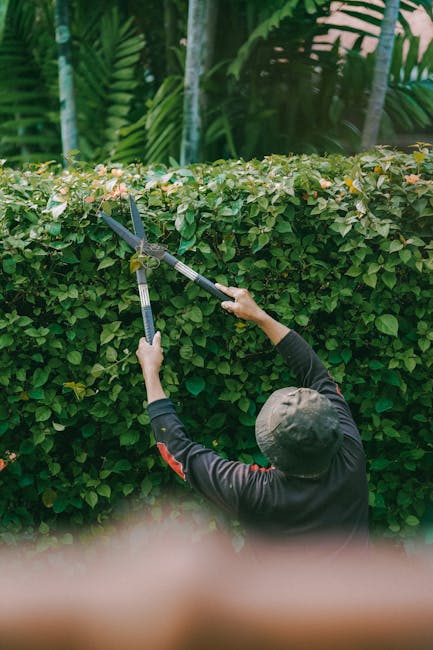
Hedges serve several roles at once: they mark boundaries, give structure, provide screening and soften the edge of a garden. Hedge trimming is therefore not just about shortening growth, but about keeping the line neat while retaining the form that makes the hedge useful. A careful trim can help a hedge look balanced from the street, from the garden and from neighbouring plots.
Different hedges need different handling. Some respond well to regular, light trimming, while others benefit from a more selective cut that respects growth patterns and avoids leaving bare patches. Overgrown hedges may need a staged approach so the work is completed without taking away too much foliage at once. Where a hedge has become uneven, shaping can help restore a straight line, a flatter top or a more compact profile.
If you are deciding what the hedge work should achieve, it can help to choose the main goal first: more light, less spread, a cleaner outline or better access. From there, the trimming can be planned around the hedge’s condition. The result should be practical as well as neat, with the boundary still doing the job it was planted for.
Garden clearance and waste removal

Garden clearance is the right choice when the space has become cluttered with cuttings, dead growth, broken containers, unwanted plants or general garden waste. It can also be useful before replanting, before landscaping work or after a long period without maintenance. The purpose of clearance is to create a workable space again, not simply to make the garden look temporarily lighter.
Clearance work can vary from removing loose debris to tackling thicker growth and heavier material that needs to be cut down and gathered carefully. The process usually begins with identifying what is staying, what is going and what may need separating for reuse or disposal. If the garden includes mixed materials, such as timber, plastic pots, potsherds or old edging, it can be better to sort the items as the work progresses so the finished area is properly stripped back.
Where access is awkward or the space is tightly enclosed, the practical plan matters as much as the cutting itself. Waste has to be moved without damaging planting that remains in place or making the area harder to use afterwards. A good clearance job leaves the site easier to inspect, simpler to maintain and ready for the next stage, whether that is routine upkeep or a larger improvement project.
Landscape gardening and redesign work
Landscape gardening is suitable when the existing layout no longer works well and the garden needs a more deliberate structure. This can involve reshaping beds, defining paths, creating clearer transitions between lawn and planted areas, or building a better balance between open space and greenery. Rather than treating the garden as a collection of separate corners, landscape work looks at the whole layout and how the parts relate to one another.
There are many ways to improve a garden without turning it into a complete rebuild. A modest redesign might bring order to a crowded border, improve the shape of a planting area or create a cleaner flow around seating and access routes. A broader landscaping project can involve preparing the ground, adjusting levels, introducing new features or updating tired areas so the space feels more intentional. Good layout decisions often save effort later because the garden becomes easier to understand and maintain.
For some customers, the value lies in making the garden simpler and more usable; for others, it is about supporting planting choices that suit the space better. Either way, it helps to separate the immediate changes from the long-term aims. That makes it easier to decide which tasks belong in the first phase and which can wait until the shape of the garden has settled.
Decking and functional outdoor surfaces
Decking can give a garden a defined standing area, bridge uneven ground or create a practical surface near doors and seating. When included as part of broader gardening services, it is often considered alongside the rest of the layout so that the new surface works with the planting and circulation around it. The aim is not only to install boards, but to make the finished area feel connected to the rest of the outside space.
Decking work may be appropriate when a garden needs a clearer focus or when a level surface would make use of the space simpler. Depending on the setting, it may sit beside lawns, borders or planting beds and form a transition between the house and the rest of the garden. Because the surface is visually prominent, planning matters: size, position, access and the relationship to surrounding features all affect how successful it will feel once in use.
Where existing timber is already in place, attention may be needed to refresh the area, improve the appearance or resolve parts that have become worn. If the main issue is not the decking itself but the surrounding garden, it can still be useful to consider the surface as part of the wider maintenance plan. One well-placed change can improve the whole feel of the garden.
Practical planning and quotation details

Garden work is easier to price accurately when the main tasks are clear. The amount of growth, the size of the space, access to the garden, the type of waste and the level of finishing all influence how the job is planned. A simple tidy-up is very different from a clearance, a hedge reduction or a landscaping job that needs more preparation and coordination. Clear information helps keep the quotation focused on the actual work.
It is useful to think about the result you want before you ask for numbers. If the garden simply needs control, the work may stay narrow. If the aim is to reclaim an overgrown area, there may be several stages, including cutting back, removing waste and improving the basic layout. For a better quotation, it helps to note the areas involved and the parts that matter most, whether that is the lawn, the hedge line, the borders or the whole plot. Then ask for a quotation with the main priorities in order.
In many cases, a short written outline is enough to start the conversation. You do not need to over-explain, but it helps to identify what is important, what is optional and what the end result should look like. If there are fixed features, limited access points or specific sections that need special care, mentioning them early can make the process more efficient and reduce the need for repeated clarification later.
About Colindale
Colindale is a district in the London Borough of Barnet, in north-west London, with a history shaped by suburban growth, transport links and major twentieth-century development. The area takes its name from Colindeep Lane and expanded significantly after the opening of the Northern line extension to Colindale station in 1924, which helped turn surrounding fields and scattered settlement into a more built-up suburb. Over time, the district became associated with housing growth, local services and later large-scale redevelopment, particularly around former airfield and institutional sites. One of the most recognisable historical associations is Hendon Aerodrome, which lies close by and played an important role in early aviation in the capital. The wider area also includes places of memory and heritage such as the Royal Air Force Museum London, set on the site of the former Hendon Aerodrome. In everyday geography, Colindale is strongly linked to the Edgware Road corridor, where transport, retail and residential uses sit alongside one another. The area has seen considerable change through the post-war and contemporary periods, with apartment development, infrastructure upgrades and continuing regeneration shaping its current character. Local green space is part of that mix too, including smaller parks and open land that break up the built environment. As a result, Colindale combines suburban housing, transport connections and layers of aviation and municipal history in a way that reflects much of outer north London’s changing urban story.
Garden upkeep after clearance or redesign
Once a garden has been cleared or redesigned, ongoing upkeep becomes important if the new condition is to last. Freshly opened ground, newly shaped edges and recently reduced growth can all change quickly if they are not maintained. That does not mean the same effort has to be repeated every time; it means the next few visits should be chosen to protect the progress already made. Routine gardening work is often most valuable in this stage because it keeps the structure visible.
After larger work, common follow-up tasks include keeping the lawn trimmed, staying on top of regrowth, checking hedge lines and removing scattered waste or clippings before they settle into beds. If planting has been introduced, the early care may need to be more cautious so the new growth is not disturbed. Where a space has been simplified, the maintenance plan can often be simpler too, because there are fewer competing features and fewer corners for clutter to collect.
It is also sensible to think about the seasonal rhythm of the garden. Growth rates change, debris gathers differently and the amount of light available to each area shifts through the year. By matching upkeep to those changes, the garden can remain orderly without feeling overmanaged. That balance is often the point of good garden care: enough attention to keep things under control, but not so much that the space loses its character.
Request a quotation for your garden work

If you need help with garden maintenance, hedge trimming, lawn mowing, garden clearance, landscaping or decking work in Colindale, the next step is to ask for a quotation based on the jobs that matter most. A clear outline of the current condition and the outcome you want will help us shape the work sensibly. We can then discuss the likely scope and whether the task is best approached as regular upkeep, a one-off tidy or a larger improvement project.
When you are ready, choose the main areas you want handled and note any access issues or awkward sections. That makes it easier to compare options and decide which work should be done first. You do not need to describe every detail, but the more clearly the main tasks are set out, the more useful the quotation will be. Tell us what needs attention and what a successful result would look like.
For a straightforward start, send through your request for a quotation and include the service you need most. If the garden has several issues, mention them in order of importance so the plan can be built around the essentials. Ask for your quotation today.